


Know which squirrel you have
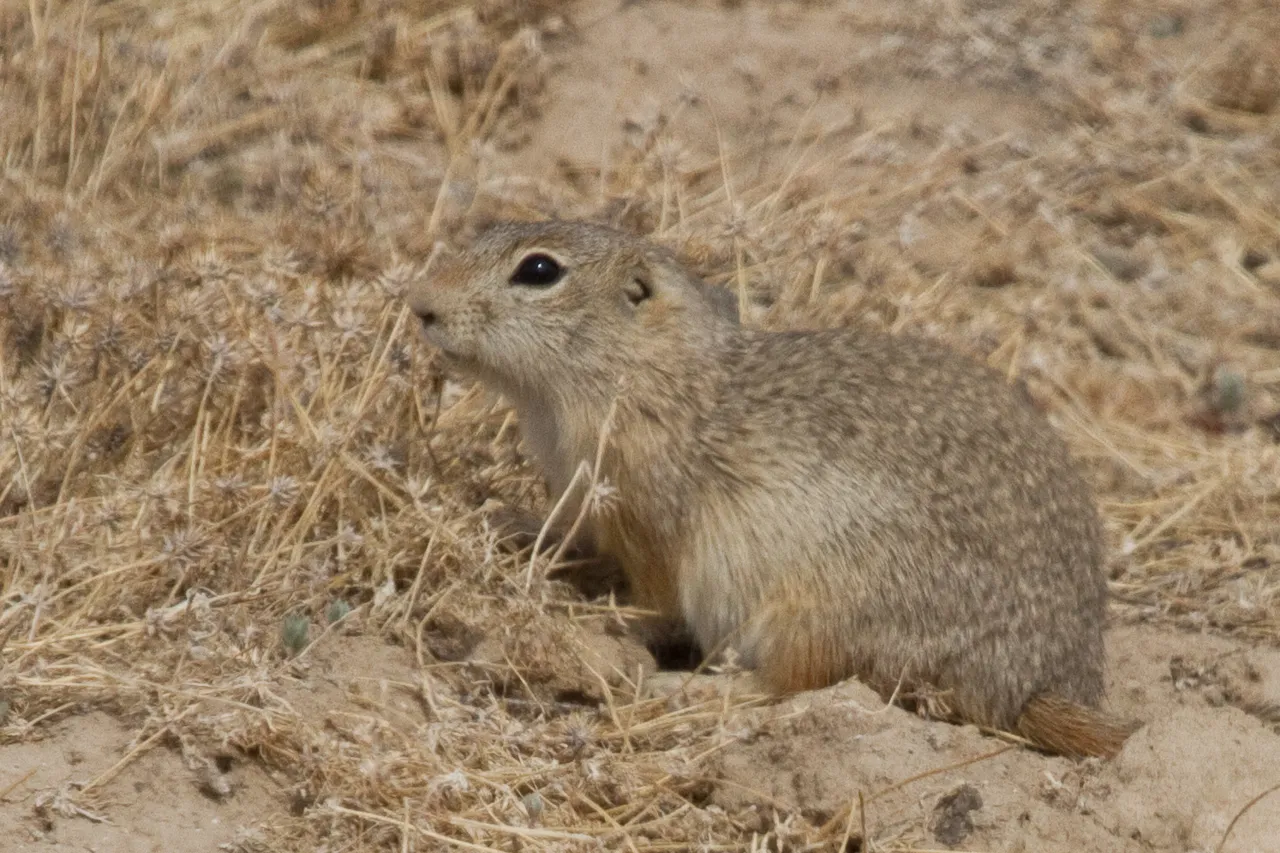
The ground squirrel most people see around the Treasure Valley is small and compact, smoky gray with pale buff underneath and a pinkish or tan wash on the face and legs. It has short legs, small ears set close to the head and a short, thin tail, nothing like the plume on the fox squirrels in Boise’s shade trees. Get too close and it gives a sharp, short whistle and drops out of sight, which is where the local name “whistle pig” comes from.
For decades this animal was called the Piute ground squirrel, Urocitellus mollis. In 2025, a genetic study published in the Journal of Mammalogy split off the populations north of the Snake River as a separate species found only in Idaho, the Snake River Plains ground squirrel, Urocitellus idahoensis. Most of the Treasure Valley sits north of the river, so that’s the name we use here. You’ll still see “Piute ground squirrel” in older sources and in Idaho’s current wildlife rules. For a homeowner, it’s the same squirrel it always was.
The legal part
Getting the identification right matters more with this rodent than with any other in our guide, because Idaho protects it.
Idaho’s rules governing wildlife classification list the Piute ground squirrel as a protected nongame species, alongside the southern Idaho ground squirrel, the northern Idaho ground squirrel, Merriam’s ground squirrel and a few others. Idaho Fish and Game’s ground squirrel page lists all of those as species that can’t be hunted and puts the responsibility on you to know what you’re looking at. The same rule says protected status isn’t meant to stand in the way of protecting health and safety, managing buildings and property, or dealing with public health concerns or agricultural damage. Where that line falls on your property isn’t something to guess at. Before you trap, shoot or poison a ground squirrel anywhere in Idaho, call Fish and Game’s Southwest Region office and ask what applies.
If you live north of the valley, two more squirrels raise the stakes. The northern Idaho ground squirrel has been listed as threatened under the Endangered Species Act since 2000. It lives only in Adams and Valley counties, in mountain meadows well north of Boise, and the state’s species office estimates its population has dropped about 80 percent since surveys began in 1985.
The southern Idaho ground squirrel is also found only in Idaho, mostly in Gem, Payette and Washington counties, in a band of hills and valleys from around Emmett northwest toward Weiser. The U.S. Fish and Wildlife Service decided in 2015 that it didn’t need federal listing, citing stable populations and years of conservation work with landowners. Idaho still classifies it as protected nongame and a species of greatest conservation need, and it carries a global conservation rank of G1, the most at-risk category.
Neither of those lives in Ada or Canyon County. But if your place is out toward Emmett, New Plymouth, Payette or Weiser, the squirrel in your pasture could be one of them, and that identification is a job for an expert.
Canal banks and the desert edge
Ground squirrels live in open, dry country with soil they can dig: sagebrush flats, grassland, field edges and old farm ground. They like well-drained banks, so canal and ditch berms, railroad grades and road shoulders often have colonies. The desert south of Kuna, inside the Morley Nelson Snake River Birds of Prey National Conservation Area, is classic habitat, and the squirrels there are a staple food for prairie falcons, hawks and badgers.
Homes run into them where the valley meets that open country: new subdivisions on the edge of the desert or old farmland, acreages with pasture and alfalfa, and lots that back onto canal banks. Irrigated green ground right next to dry ground is about the best setup a ground squirrel can find.
Their year above ground is short. Males come up first, usually in late January, and the females follow. They breed almost right away, raise one litter, fatten up on the spring green-up and go back underground by late June or early July. Federal researchers in the Birds of Prey area found that in a dry spring they can vanish as early as May. If you see them in February and they’re gone by the Fourth of July, that’s normal.
Damage, fleas and plague
Ground squirrels eat grasses, alfalfa and other green plants, and in a garden they’ll mow down seedlings and young vegetables. Their burrows riddle field edges and lawns along the property line, undermine ditch banks and leave holes that are hard on ankles, horses and mower wheels.
Fleas are the bigger concern. Plague is a bacterial disease that circulates among wild rodents in the West and spreads mostly through flea bites. Central District Health has confirmed plague in ground squirrels south of Boise, after die-offs in an area from Boise south to the Snake River and from Kuna east to Mountain Home. When an infected squirrel dies, its fleas leave the body looking for a new host, and that can be a dog or cat that’s been nosing around the colony.
Human cases in Idaho are rare, but the precautions are easy:
- Don’t touch sick or dead squirrels, and don’t let pets play with them.
- Keep dogs and cats on a flea preventive your vet recommends, and keep them away from active colonies.
- Don’t feed ground squirrels at parks or trailheads.
- If you find several dead squirrels in one area, Idaho Fish and Game has asked people to report groups of five or more without handling them.
- See a doctor about a sudden high fever after time in an area with squirrel die-offs.
Living next to a colony
Pest Pro X doesn’t trap or treat ground squirrels, and most of what a homeowner can do on their own is make the yard less inviting. Keep weeds and tall grass down along fence lines so new holes are easy to spot, and fill old burrows once the squirrels have gone underground for the summer so you can tell which holes are new next spring. Fencing buried a few inches into the soil can help protect a vegetable garden, though ground squirrels dig and climb, so don’t count on it. Keep wood piles, hay and compost away from the house, as Fish and Game recommends during plague years. For anything that removes squirrels, start with that call to Fish and Game.
If you’re not sure what’s digging in your yard, a free rodent inspection will sort it out. If it’s a ground squirrel, we’ll point you to the right agency. If it turns out mice or rats are working their way into the house or garage, that’s what our rodent control service handles. You can also get in touch first.