

Two kinds of stinging insects cause most of the trouble around Treasure Valley homes, and they nest in very different places.
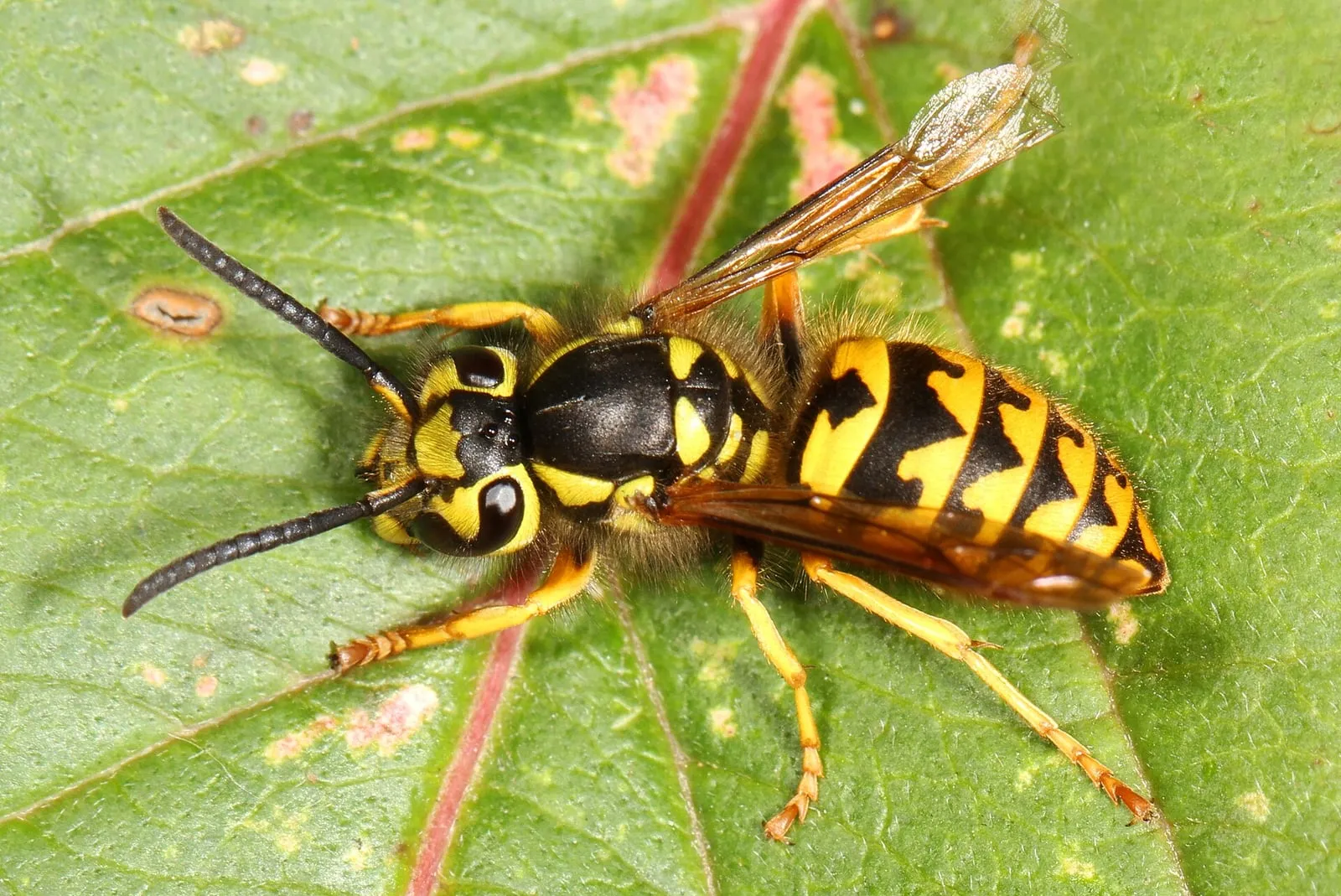
Paper wasps build open, gray paper combs where you can see them: under eaves and porch ceilings, on deck railings and play sets, under shed overhangs. Yellowjackets are the ones crashing your barbecue in August, and their nests are usually out of sight. University of Idaho Extension counts eleven yellowjacket species in the state, four of them stinging hazards worth controlling: the western, common, German and aerial yellowjackets. Most nest in the ground, often in an abandoned rodent burrow. The aerial yellowjacket is the exception and hangs its papery ball in shrubs, trees or under an overhang.
Catch paper wasp nests while they’re small
Paper wasp queens start new nests in spring, and the colonies grow all summer. A nest taken down in spring doesn’t get the chance to become the busy one over your back door in July.
Nest knockdown is already part of our regular exterior service. It happens during the dry cleaning at the start of every visit, along with the webs, and covers the house, outbuildings, fence lines and webbed shrubbery. The tech checks eaves, soffits, gable vents, porch ceilings, deck undersides, play sets, sheds and fence lines, since those are the spots paper wasps like best. Then a perimeter treatment goes along the foundation and under the eaves, which helps cut down on rebuilding in the same spots. Flowering plants are never sprayed directly, so the bees in your garden are left alone.
With a general treatment lasting about three months, quarterly service fits most homes, and properties with heavy activity can go to every two months. If a new nest shows up in between, text your tech.
Nests in the ground, in walls and up high
We treat wasp and yellowjacket nests wherever they turn up: a hole in the lawn, a gap in a retaining wall, the siding, the space under a deck, or a hornet nest hanging high in a tree.
If you’ve found one, mark it with a flag or stake from a safe distance and keep kids, pets and the lawn mower away from it. Don’t plug the hole or pour anything down it before we get there. Trapped yellowjackets often chew a new way out, sometimes into a wall. Then text your technician where it is, and mention anyone in the house who reacts badly to stings.
Yellowjackets get the most attention in late summer and early fall, when colonies peak and workers go looking for sugar and protein. Keeping trash cans closed and pet food inside helps a lot that time of year. Yellowjackets in late summer in the Treasure Valley explains why it happens and how to keep them off the patio.
Usually not the only thing under the eaves
Wasps and spiders tend to share the same eaves, so this pairs naturally with spider control and our standard residential pest control. Businesses with yellowjackets around dumpster enclosures or outdoor seating can add it to commercial pest control. If you’re worried about treatments around children and pets, read pest control safety with pets and kids.
We take down nests from the subdivisions of Meridian and Star to the orchards and gardens out toward Caldwell. Request a quote and tell us where the nests are.