

Dry summers, irrigated yards and a lot of insects circling the porch lights mean Treasure Valley spiders eat well. Most of them are harmless, and a few earn their keep in the garden. Still, nobody wants a funnel web in every window well, a dozen spiders racing across the basement floor in August, or a black widow in the box where the sprinkler valves are.
Spider control works the same way as our residential pest control, with more time spent where spiders build. The tech knocks down webs, egg sacs and nests by hand from the eaves, windows and window wells, porch ceilings, light fixtures and decks, then the sheds, fence lines and webbed shrubbery. The egg sacs are the part that pays off later, since each one can hatch a new batch. After that comes a band of treatment along the foundation and up under the eaves, where spiders travel and build.
If you’ve seen black widows, or one spot is worse than the rest, text your technician before the visit so they know where to start.
The four we hear about most
Hobo spiders and giant house spiders are the big brown ones. Both are funnel-web spiders that build a flat sheet of web with a funnel retreat at one end, in window wells, wood piles, rock borders and basement corners. They’re hard to tell apart without a close look, so we wrote a whole post on hobo spiders vs. giant house spiders.
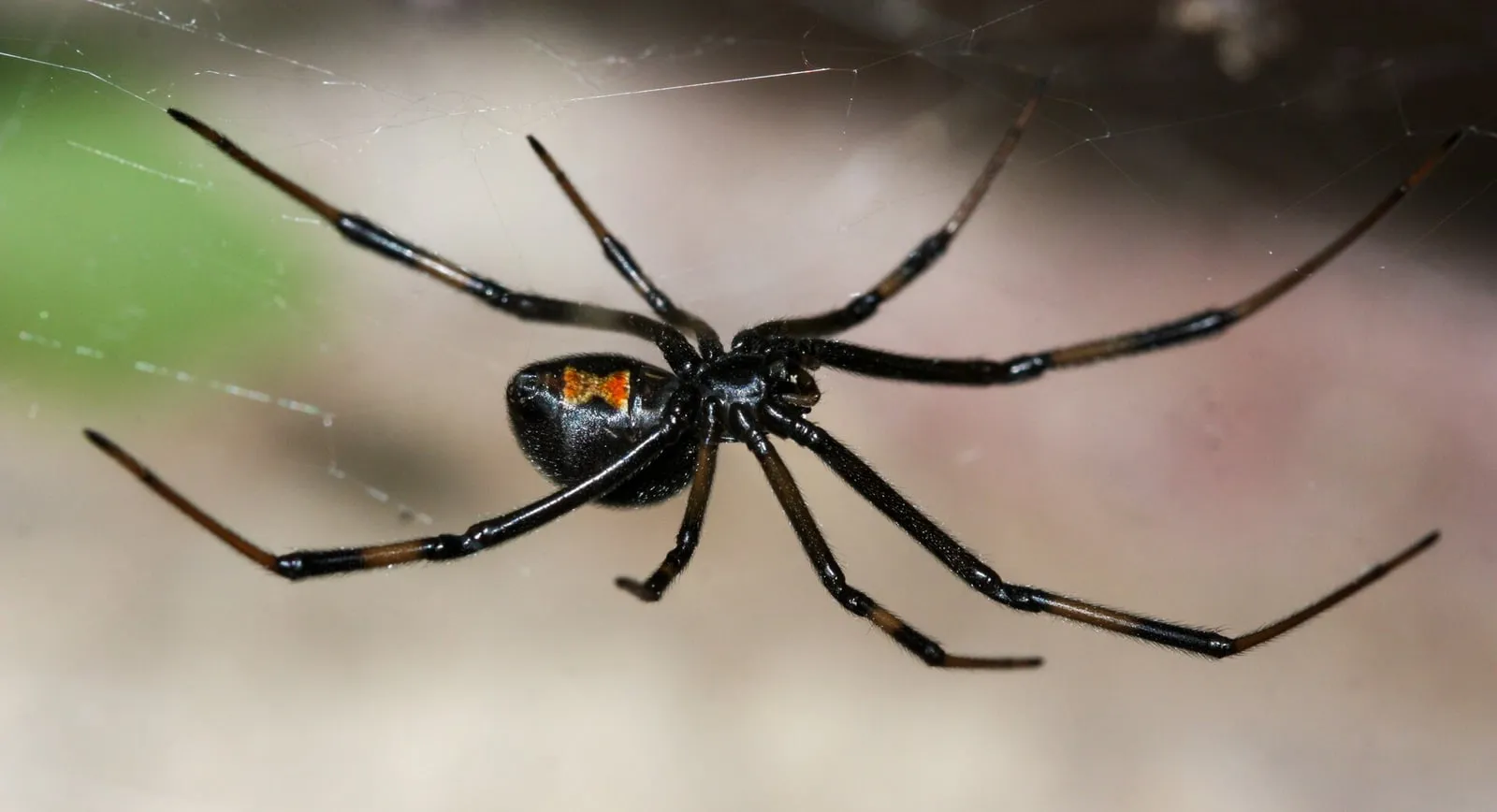
Black widows want dry, dark spots nobody disturbs: block walls, meter boxes, irrigation valve boxes, under deck boards, stacked firewood and garage corners. Their webs are messy and tangled, and the silk feels noticeably strong. This is the one to take seriously. See where black widows hide.
Wolf spiders don’t build webs at all. They’re fast hunters that wander in under doors, especially in homes near lawns and fields, and turn up in garages and basements.
Cobweb spiders are the small ones behind the tangles in ceiling corners, light fixtures and window frames. They’re harmless. They’re also why the porch looks dusty again two weeks after you swept it.
Making the house less inviting
University of Idaho Extension suggests a few habits that make any spider treatment work better:
- Move coarse bark, rock piles, stacked lumber and firewood away from the foundation where you can.
- Seal gaps around doors and windows with weather-stripping or caulk.
- Cut down on clutter in basements, crawlspaces, garages and closets. Boxes on the floor make good hiding spots.
- Wear gloves when you reach into window wells, valve boxes and woodpiles.
Getting ahead of August
Late summer is when people notice spiders most, so a treatment in spring or early summer gets ahead of the wave. A general treatment lasts about three months, which puts most homes on quarterly visits. Homes backing onto fields or open space, or with a lot of outbuildings, may need service every two months.
Spiders follow their food, so fewer insects around the house means fewer spiders. Wasp and yellowjacket control and ant control both help, and so does knowing about fall invaders like boxelder bugs and earwigs. Older homes in Boise’s North End and new builds on the edge of Meridian both get their share. Spring is a good time to request a quote.