
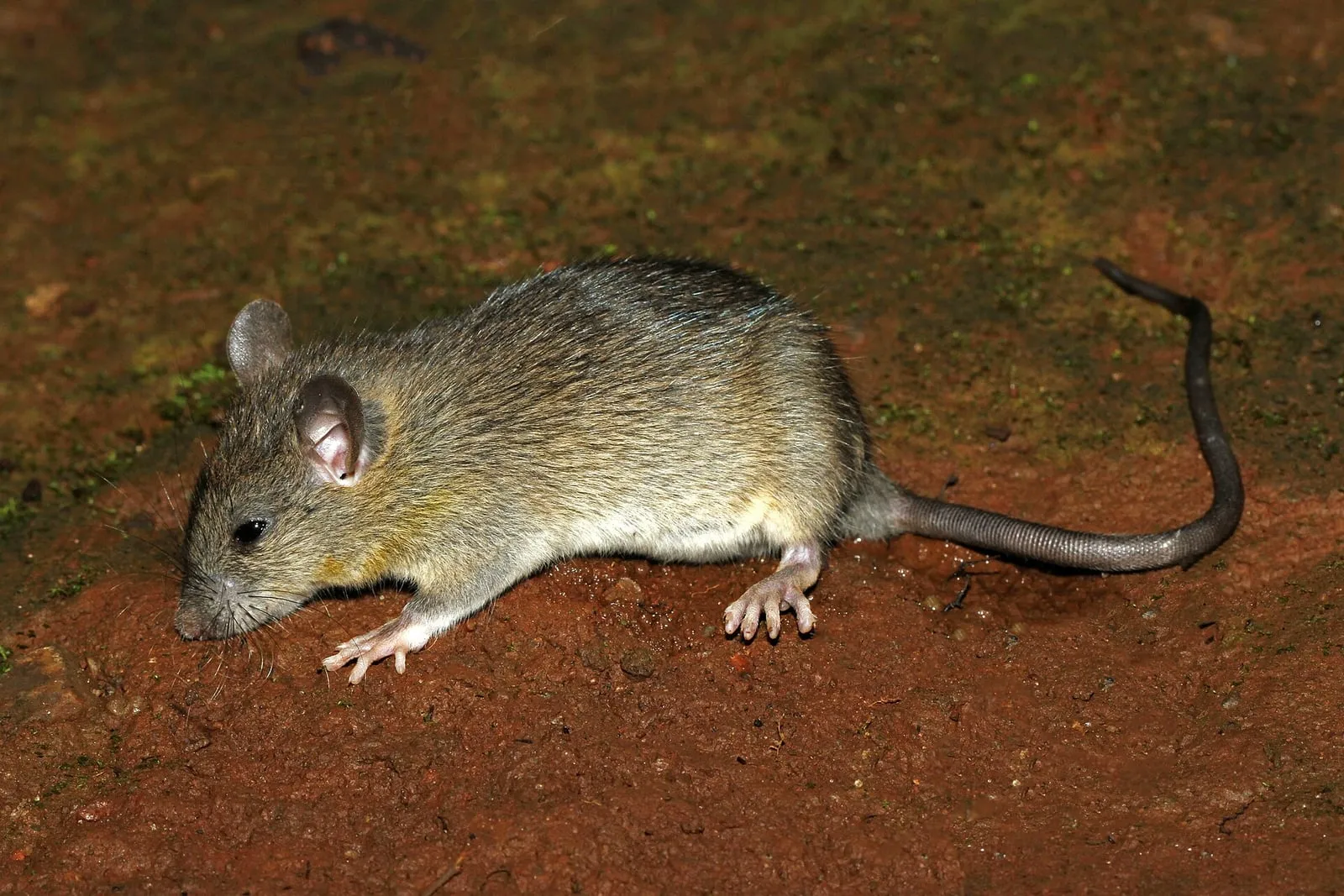


Roof rats in the Treasure Valley so far
For most of Boise’s history, the answer to “Do we have roof rats?” was “Probably not.” Roof rats like warm, mild places. The Internet Center for Wildlife Damage Management describes their U.S. range as the southern half of the East Coast, the Gulf states and the Pacific Coast, and says most interior states are largely free of them apart from isolated infestations. Southwest Idaho, with its cold winters and dry summers, wasn’t on the list.
That has changed in the last few years. Roof rats have been confirmed in Eagle homes, and local reporting has called Eagle a hotspot. The City of Boise now lists Norway rats and roof rats as the most prominent rat species in the area, and the Idaho Department of Health and Welfare warns specifically that roof rats get into homes through trees and utility lines, leaving attics and roofs vulnerable.
How many there are, or how far beyond Eagle they’ve settled, nobody knows yet. No agency publishes species-level counts, and most sighting reports just say “rat.” Plenty of the rats people see along canals and under sheds turn out to be the burrowing Norway rat. So when you see one, the thing to figure out is which rat it is, because the two need different fixes.
Which rat you’ve got
Start with the tail. A roof rat’s tail is longer than its head and body combined, and if you lay it forward over the back of a dead one it reaches at least to the nose. It’s uniformly dark and finely scaled. A Norway rat’s tail is shorter than its body, paler underneath, and only reaches about the middle of the skull.
Then look at the face and build. Roof rats are slim and sleek, with a pointed muzzle, large thin ears that reach the eyes when folded forward, and big dark eyes. The fur is usually dark gray to black on top, with a gray-to-white belly. A Norway rat is chunkier, brown, blunt-nosed and small-eared. Adult roof rats are also lighter, typically five to nine ounces against the Norway rat’s pound or so.
Often you can tell from behavior before you ever see the animal. Roof rats are, as the name says, climbers. They run fence tops, cable lines and tree limbs, nest in attics, dense shrubs and vines, and only occasionally dig. Noise overhead at night points to roof rats; burrows in the dirt point to Norway rats. The droppings back it up. Roof rat droppings are about half an inch long with pointed ends, while Norway rat droppings are bigger, up to three-quarters of an inch, and blunt.
Fruit trees and attics
Roof rats prefer fruit, nuts, berries, seeds, snails and slugs, according to UC IPM, and they’ll travel a few hundred feet to get to them. In a Treasure Valley yard that means fruit trees, walnut trees, grape arbors, vegetable gardens, birdseed and pet food. Fruit hollowed out while it’s still hanging on the tree is a classic sign.
Inside, they head for the attic, where they chew wiring, tear up insulation and leave droppings and urine wherever they travel. They can end up anywhere in a house, crawlspace included, but they come in from above far more often than people expect. A homeowner can seal every gap at ground level and still have rats.
Cutting off the way up
Most roof rat prevention means taking away the bridges to your roof and closing the gaps at the top of the house.
- Cut back tree limbs, shrubs and vines that touch or hang over the roof. UC IPM’s quick advice is to prune limbs within 3 feet of the roof, and its fuller guidance suggests removing overhanging limbs within 6 feet, so more room is better. Keep shrubs a couple of feet off the walls, and thin out thick arborvitae, ivy on fences and overgrown junipers, which are favorite nesting spots.
- Check soffits, the gaps where the roofline meets the gutters, roof and gable vents, and anywhere cable, phone or power lines come into the house. Rats can get through a gap about half an inch wide. Use 1/4-inch hardware cloth over vents and sheet metal or copper wool and caulk in gaps. Health officials also recommend covering vent openings and rooftop plumbing vents more than 2 inches across with wire mesh.
- Pick fruit as it ripens, pick up what falls, and gather nuts. Bring pet food in at night, store birdseed and chicken feed in metal cans, and consider taking feeders down for a while if you’ve seen rats.
- After dark, stand outside with a flashlight for a few minutes and watch the fence tops and utility lines. In the attic, look for droppings along rafters and on top of insulation.
Our post on what to consider when you have a rodent problem covers trapping and baiting basics. Rats are naturally suspicious of new objects and may avoid traps for days after they first appear, so UC IPM suggests leaving traps baited but unset until the bait has been taken several times, then setting them.
Something running in the attic at night, or a long-tailed rat on the fence, is reason enough for a free rodent inspection. Getting the species right matters more with roof rats than with almost any other rodent, since the problem spots are up on the roofline instead of at the foundation. Once you know what you have, contact Pest Pro X about rodent control.