
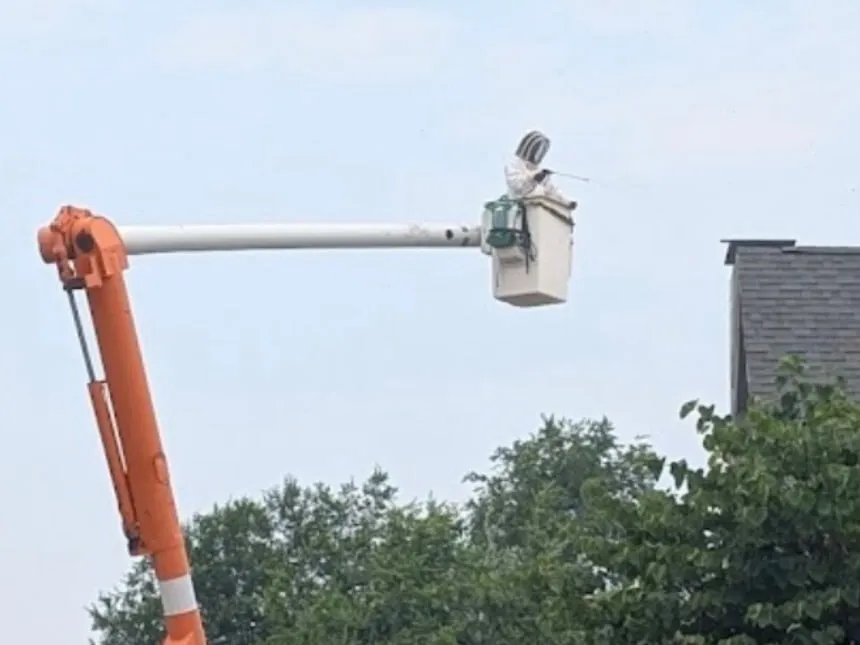
Most of the bugs that end up inside a Treasure Valley house started outside it. Spiders build along the eaves and around porch lights. Paper wasps start nests under the soffits in spring. Ants trail up from the foundation, and in fall boxelder bugs and earwigs go looking for a warm crack to spend the winter in. So we work on the outside of the house, where those pests live and travel, and fewer of them make it indoors.
Webs and nests come down before anything is sprayed
Our residential pest service starts with a dry cleaning of the areas to be sprayed, removing any webs or nests that can be knocked down. This includes outbuildings and fence lines. In many cases the shrubbery is coated in webs and nests, and we will take care of it all. On the house itself, that means the eaves, window frames, light fixtures and porch ceilings, and on the rest of the lot it means sheds, shops and playhouses too. Getting the old silk and egg sacs off first means the treatment lands on clean surfaces.
After that, a band of treatment goes along the foundation and up under the eaves. Those are the two places on a house where insects most often travel, hide and build. Flowering plants are never directly hit; our pollinating friends are always considered.
Before the tech gets there
You will have direct contact via text with the technician visiting your property for any special instructions: the dog in the yard, the locked gate, the nest you spotted behind the grill. It’s the same number to use if something new shows up between visits.
Beyond that there isn’t much to do. Unlock side gates and bring dogs inside while the tech is working. If you can, pull firewood, storage bins and toys a little way off the foundation so the treatment reaches the wall. Mention vegetable gardens, chickens, fish ponds or beehives so the tech can work around them. Keep kids and pets off treated surfaces until they’re dry, and see our post on pest control safety with pets and kids for more on that.
Quarterly, or every two months
A general treatment lasts about three months, so quarterly service is the standard. Properties with heavy activity do better on a bi-monthly schedule. That often means homes backing onto a canal, an open field or foothill open space, or a house coming off a bad spider year. We’re flexible and don’t lock clients into long contracts. For timing through the year, read how often you should get pest control in Boise.
What it handles, and what needs something else
Regular exterior service takes care of most of the everyday pests around here. On the spider side, that’s funnel-web spiders in basements and window wells and black widows in block walls and irrigation boxes. Our spider control page goes further, and so do the posts on hobo spiders vs. giant house spiders and where black widows hide.
Paper wasp nests come down during the dry cleaning (wasp and yellowjacket control has the details). Odorous house ants and pavement ants are the usual ant calls, covered under ant control. In autumn, boxelder bugs and earwigs pile up on sunny walls; we wrote about those in fall invaders in Idaho.
Mosquitoes and rodents are a different job. Mosquitoes rest in the lawn and shrubs, not on the foundation, so they’re handled with mosquito fogging. Mice and rats start with a free rodent inspection, and rodent control explains what comes after.
We work out of west Boise and cover homes across the valley, including Boise, Meridian, Eagle and Nampa. When you’re ready, request a quote.