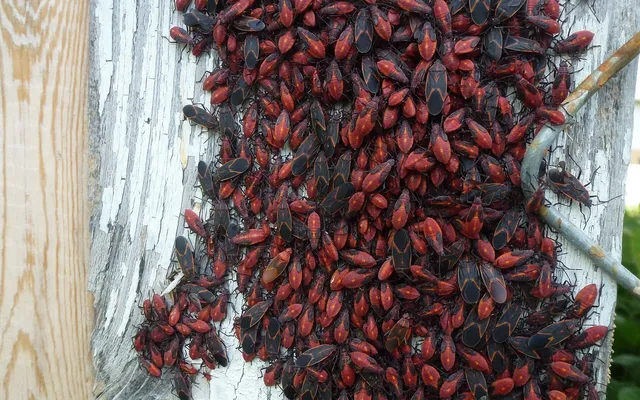
Somewhere around the middle of August, the Treasure Valley’s yellowjackets change personalities. In June you barely noticed them. By Labor Day they’re in your soda, on the burger, at the trash can and bouncing off your face while you try to eat outside. The colony hasn’t developed a grudge. It’s at the peak of its year, and what it needs has changed.
A yellowjacket colony lasts one year. A single queen that spent the winter tucked under bark or in leaf litter starts a small nest in spring and raises her first workers, and the colony grows all summer from there. By late summer it can be huge: UC IPM puts a colony at between 1,500 and 15,000 individuals, depending on the species.
Then it stops growing. Early in the season the workers spend their time hunting insects to feed the larvae. Once the nest quits expanding they go after sweets, and UC IPM notes they’re particularly interested in sugar at this point. Into fall they’re mostly scavengers, working picnics, garbage cans, pet food bowls and the apples rotting under your tree. The nest is also at its biggest now, with the most to defend. That combination is what you’re dealing with on the patio, and it lasts until cold weather shuts the colony down. Only the newly mated queens survive the winter, and they start from scratch in spring. Old nests aren’t reused.
The nest in the lawn
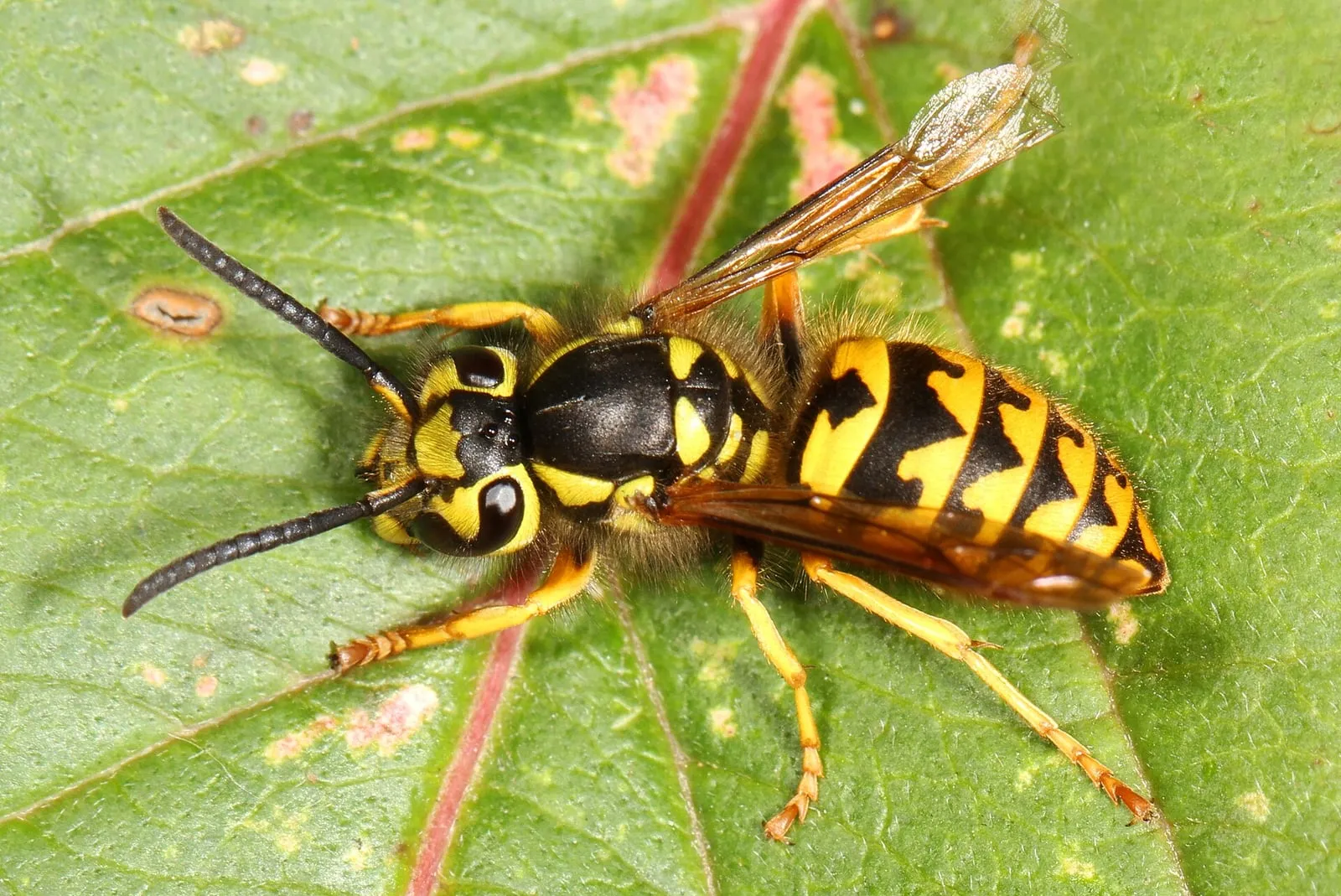
The yellowjacket most people tangle with here is the western yellowjacket (Vespula pensylvanica). Utah State University Extension describes it as 3/8 to 5/8 inch long, yellow and black, and nesting in old rodent burrows, holes and structural voids.
The rodent-burrow habit is why so many people find the nest with a lawn mower, a string trimmer or a bare foot. What gives it away is a steady stream of yellowjackets flying in and out of a single hole in the lawn, a flower bed or a slope, busiest in the warm middle of the day. The opening itself is usually small and clean, with no obvious mound. Walk the yard around midday if you want to find one before the mower does.
Don’t stand over the hole to get a better look. Watch from several feet off to the side, flag the spot, and keep kids, dogs and mowers away from it.
Telling the black-and-yellow ones apart
Three wasps account for most of what people see around here, and they behave very differently.
Yellowjackets are compact and smooth, with bright, jagged yellow-and-black bands and a short waist. They fly fast and darting with their legs tucked up, and their nests are out of sight: underground, in wall voids, under decks. These are the ones at your picnic.
Paper wasps are longer and slimmer, with a pinched waist and long legs that dangle in flight. They build an open, single-layer comb that hangs like an upside-down umbrella under eaves, deck rails, grill covers and play sets, so check those spots. Around Boise most of what you’ll see is the European paper wasp, a yellow-and-black species that looks like a yellowjacket at a glance. UC IPM describes paper wasps as much less defensive than yellowjackets. They hunt caterpillars and rarely bother your food.
Bald-faced hornets are black with ivory-white markings, including a white face. Despite the name, they’re technically an aerial yellowjacket, not a true hornet. Their nests are gray paper footballs or teardrops hanging in trees and shrubs or from eaves, so look up into the trees near the house. They’re very defensive of the nest. Give it plenty of room.
Making the yard less interesting
You can’t make yellowjackets disappear in September, but you can give them less reason to hang around. Most of it is food. Use cups with lids and straws, and look before you sip from a can that’s been sitting out. Keep food covered until you serve it and clean up right after. A dish of kibble on the porch is a yellowjacket buffet, so bring pet food in. Seal the trash cans, empty them regularly and rinse the recycling. Pick up fallen fruit; rotting apples, pears and plums draw them in from all over.
The CDC advises outdoor workers to avoid scented products and wear light-colored clothing around stinging insects, which is reasonable advice for a barbecue too. When one lands near you, don’t swat. Move away slowly. Flailing tends to start trouble, and yellowjackets can sting more than once.
Lure traps help some. UC IPM notes they can reduce the local foragers but won’t eliminate a large population. Hang them away from where people sit, not over the table. Traps set in late winter and spring catch queens before they start nests.
If someone is stung and has trouble breathing, swelling of the face or throat, dizziness or hives spreading beyond the sting, call 911 right away. For an ordinary sting, wash it with soap and water and put ice on it.
When a nest isn’t a DIY job
A paper wasp nest the size of a coaster under the eave, knocked down at dusk, is a reasonable homeowner job. A western yellowjacket ground nest in August usually isn’t. Leave it to a professional if:
- You or anyone in the household is allergic to stings.
- The nest is near a door, a play area or a path people use every day.
- It’s in a wall or under siding. Utah State University Extension is blunt about this: never plug entrance holes. The wasps will look for another way out, and sometimes that’s into the house.
- You don’t know where the nest actually is. UC IPM notes that underground nests can be quite a distance from the visible entrance, and that wasps will attack if they sense a poison being applied to their nest.
Skip the folk remedies. Gasoline down the hole is a fire hazard and a soil contamination problem. Water rarely reaches the nest and mostly makes the colony angry.
There’s also the option of doing nothing. If the nest is in a back corner nobody uses and it’s already October, you can wait it out. Cold weather ends the colony on its own, and yellowjackets eat a lot of pest insects over the summer.
If the nest is somewhere you can’t avoid, flag it and let us know. Our wasp control covers nests in the ground, in walls and up in trees. Customers on residential service get webs and nests knocked down around the house, outbuildings and fence lines at the start of each visit. Call (•••) •••-•••• or send us a message. If it’s mosquitoes rather than wasps ruining your evenings, see our post on mosquitoes and West Nile virus in Ada County.
Quick answers
Why are yellowjackets so aggressive in late summer and fall?
By August, colonies are at their largest and have stopped growing, and the workers shift toward hunting sugar and scavenging. That puts thousands of hungry foragers at your soda, fallen fruit and trash cans right when insect prey is getting scarce. They're also more defensive of a nest that has reached full size.
When do yellowjackets die off in Idaho?
Yellowjacket colonies normally last only one season. As fall turns cold, the workers die off and only newly mated queens survive the winter, tucked into sheltered spots. Each queen starts a brand-new nest in spring, and old nests aren't reused.
Should I pour gasoline down a yellowjacket nest?
No. Gasoline is a fire hazard, contaminates the soil and often doesn't reach the main nest chamber, which can sit well away from the entrance hole. Plugging or flooding the hole is also a bad idea, because the wasps may simply dig a new exit, sometimes into a wall.
What's the difference between a yellowjacket and a paper wasp?
Yellowjackets are compact, with bright yellow-and-black bands, a short waist and legs tucked in flight, and they nest out of sight in the ground or in wall voids. Paper wasps are slimmer, with long legs that dangle as they fly, and they build open, umbrella-shaped combs under eaves and railings. Paper wasps are generally much less defensive.