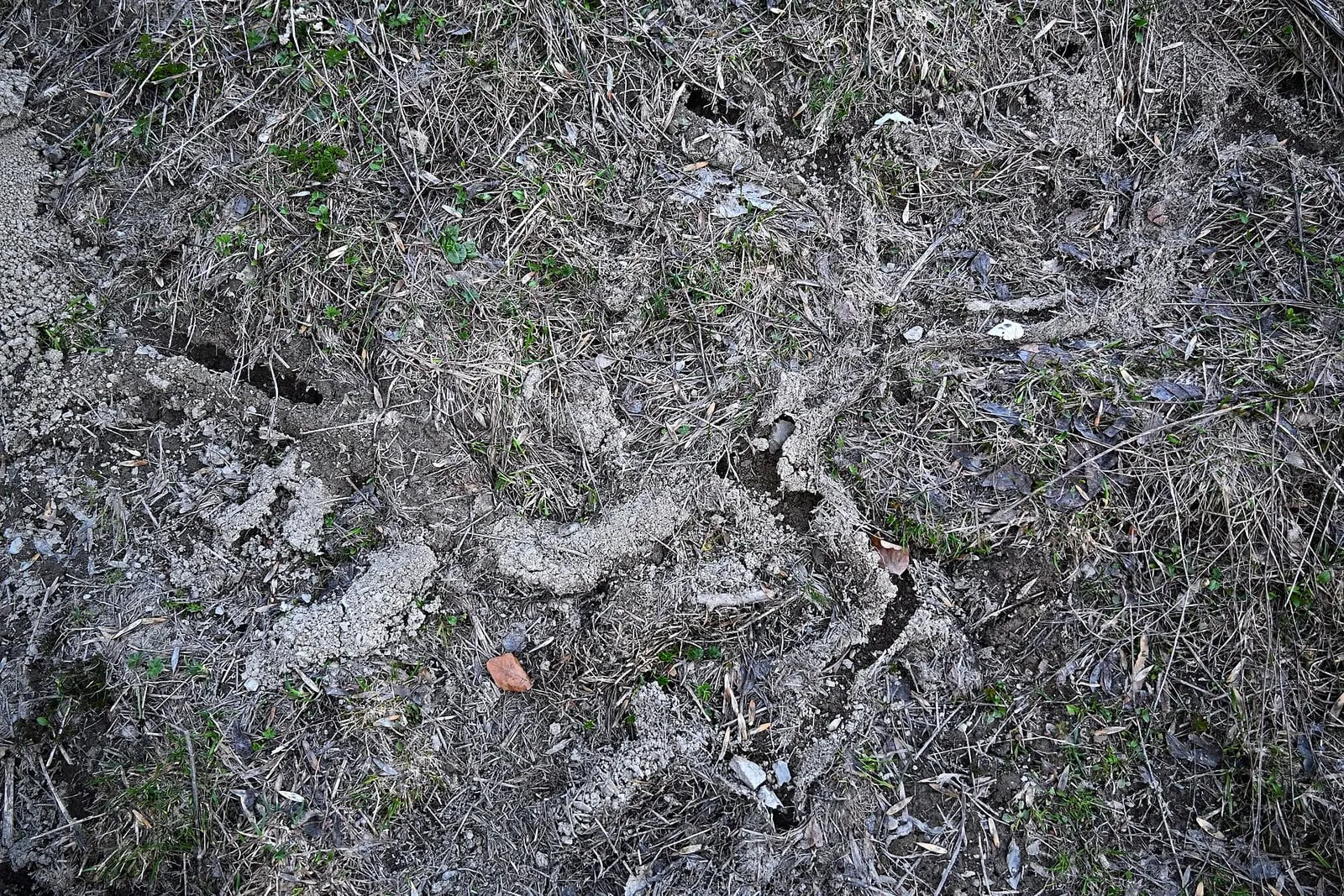
Every March the snow pulls back from Treasure Valley lawns and leaves something that looks like a toddler drew a subway map in dead grass. Narrow, winding trails a couple of inches wide run from the flower beds to the fence and back, with a few small holes along the way. Voles made them, under the snow, while you were inside watching it come down.
It’s October now, which is the useful time to be reading about this. The lawn will mostly heal on its own come spring. A young tree that gets chewed all the way around over the winter usually won’t, and what you do before the first snow decides that.
Protect the trees first
Voles gnaw bark at and just above ground level, and UC IPM notes that under snow, the damage can extend a foot or more up the trunk. A tree girdled all the way around will often leaf out in spring and then decline, because the bark that carries food down to the roots is gone.
The fix is a cylinder of 1/4-inch hardware cloth around the trunk. Chicken wire won’t do it; the openings are big enough for a vole to walk through. Make the guard tall enough to stay above the deepest snow you expect, drifts included. Around 18 to 24 inches works for most valley yards. Bury the bottom 4 to 6 inches in the soil so voles can’t slip underneath, and leave an inch or two between the mesh and the trunk so the tree has room to grow. Stake or brace it so it can’t get pushed against the bark. Get guards on before the first snow and check them each spring.
Voles don’t like to feed in the open, so take away their cover near the trunk. UC IPM suggests keeping about a 4-foot circle around the base of young trees free of grass and weeds. Pull wood chip mulch a few inches back so it isn’t stacked against the bark.
The rest of the yard before winter
Keep mowing until the grass stops growing, and set the last mow a little lower. Short grass gives voles less cover under the snow. Trim the tall grass along fences, ditch banks and bed edges too. Plenty of Treasure Valley yards back onto irrigation ditches or fields, and that’s where voles move in from. Woodpiles, brush piles and compost should sit away from the lawn.
If numbers are high, trapping helps. UC IPM notes that mouse-size snap traps set at right angles across a runway and baited with peanut butter or apple work well. Cover them so birds and pets can’t get at them.
Loose rodenticide bait scattered on the lawn or dropped down holes can put pets and wildlife at risk. If bait is used at all, it belongs in tamper-resistant stations. Our post on pest control safety around pets and kids covers what to ask.
While you’re out there, walk the yard and make a note of any mounds or holes you see now. In March you’ll know which ones are new.
What happened under the snow
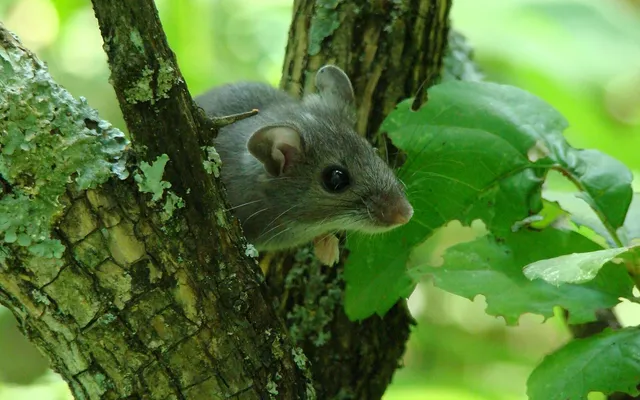
Voles, often called meadow mice or field mice, are stocky, short-tailed rodents with small eyes and ears. They don’t hibernate. Once snow covers the lawn they tunnel along the surface of the grass beneath it, where they’re warm, hidden from hawks and owls, and surrounded by food. They graze the blades down to the ground and keep using the same paths until they’re worn into trails.
When the snow melts, all of it shows up at once. University of Massachusetts Extension notes that this kind of runway damage appears at snowmelt in March or April, and that it can look severe, especially mixed with snow mold or cold injury.
Vole signs:
- Surface runways about 1 1/2 to 2 inches wide, made of clipped or matted grass
- Small, open burrow holes, roughly 1 1/2 to 2 inches across, along the trails
- Small greenish or brown droppings and bits of clipped grass in the runways
- Gnawing on the bark at the base of shrubs and young trees
Vole numbers swing a lot from year to year. A winter with long-lasting snow cover tends to produce more damage, and southern Idaho has seen real boom years.
Vole, gopher or “mole”
People in Boise call anything that tunnels in the yard a mole. Voles leave trails on the surface and open holes, with no mounds of dirt. They eat grass, bark, roots and bulbs, and they mostly stay outdoors.
Pocket gophers push up crescent- or horseshoe-shaped mounds of loose soil, with the hole off to one side and plugged with dirt. In snowy months they also tunnel through the snow and pack those tunnels with soil, and UC IPM notes that long earthen cores are left lying on the lawn after the melt. So in March you might find two kinds of winding trail. A sunken path of dead grass is voles. A raised rope of dirt is a gopher. Gophers girdle trees too, but mostly below ground, on the roots.
True moles leave volcano-shaped mounds with no visible hole, plus raised ridges where they tunnel just under the surface. Idaho’s mammal lists include just one mole, the coast mole, and it’s known only from a small corner of west-central Idaho. In the Treasure Valley, the “mole” is almost always a pocket gopher.
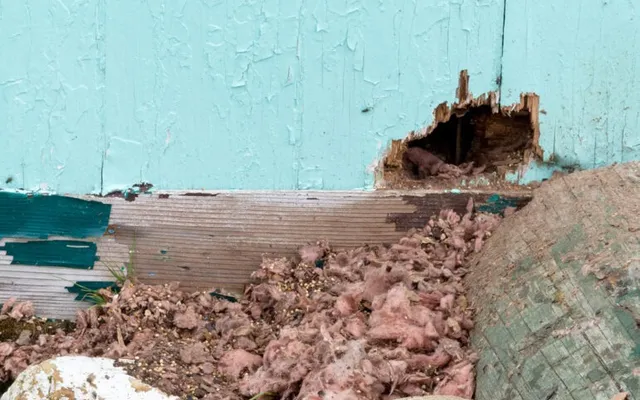
Ground squirrels leave open, unplugged holes, often with a scatter of soil, and you’ll see them out in daylight in spring. House mice and deer mice are more interested in your garage and crawlspace than your lawn.
Fixing the lawn in spring
Voles mostly eat the blades and leave the grass crowns and roots alone, so runways often recover on their own once the lawn starts growing. Wait until the turf is dry before you touch it, because raking soggy spring grass tears up what you’re trying to save. Then rake out the matted dead grass and droppings, wearing gloves as you would around any rodent droppings, and give the lawn a light spring feeding to help the damaged areas fill in. After a few weeks of growth, overseed whatever is still bare with seed that matches your lawn. Rake out and level any gopher cores and mounds so you can spot fresh activity.
We don’t trap or treat voles or gophers. If you can’t tell which one you’ve got, or you’re worried something is getting closer to the house, our free rodent inspection can sort that out. When mice or rats are part of the picture, rodent control usually means baiting the outside of the home. Call (•••) •••-•••• or get in touch.
Quick answers
Will my grass grow back after vole damage?
Usually, yes. Voles mostly eat grass blades and leave the crowns and roots alone, so the runways often green up on their own as the weather warms. Rake out the dead grass and droppings once the lawn is dry, give it a light feeding, and reseed only the spots that are still bare after a few weeks of growth.
Are there moles in Boise?
Practically speaking, no. Idaho's only mole species is known from a small area of west-central Idaho, far from the Treasure Valley. The mounds most people here call mole hills are made by pocket gophers.
How do I protect young trees from voles over winter?
Wrap the base of the trunk with a cylinder of 1/4-inch hardware cloth, buried 4 to 6 inches into the soil and tall enough to clear the snow line, with room for the trunk to grow. Pull mulch and grass back from the trunk so voles don't have cover right where they feed. Put guards on in fall before the first snow.
Do voles get into houses?
Rarely. Voles live outdoors in grass and ground cover and seldom enter homes, unlike house mice and deer mice. If you're finding droppings indoors, you're more likely dealing with mice.