Boise gets a funny stretch every fall. The afternoons are still warm enough for shorts, then a couple of clear nights drop into the 30s, and suddenly the south side of the house is covered in boxelder bugs, there’s an earwig in the dish rack, and something big and leggy is crossing the living room carpet. It’s all the same signal. A lot of our local insects spend the winter as adults, and the first cold nights send them looking for a crack to hide in. Houses have plenty.
Why the first cold nights matter
An insect that overwinters as an adult needs a sheltered, stable spot to wait out the cold. On a fall afternoon, a sun-warmed south or west wall is the warmest place around, so bugs collect there and then follow the warmth into gaps around siding, window trim, vents and the sill plate. University of Idaho Extension notes that boxelder bug movement off the trees increases in October, right after the first frost.
Mice keep a similar calendar for their own reasons. As nights cool and outdoor food thins out, a warm garage or crawlspace starts looking good.
Who shows up
Boxelder bugs
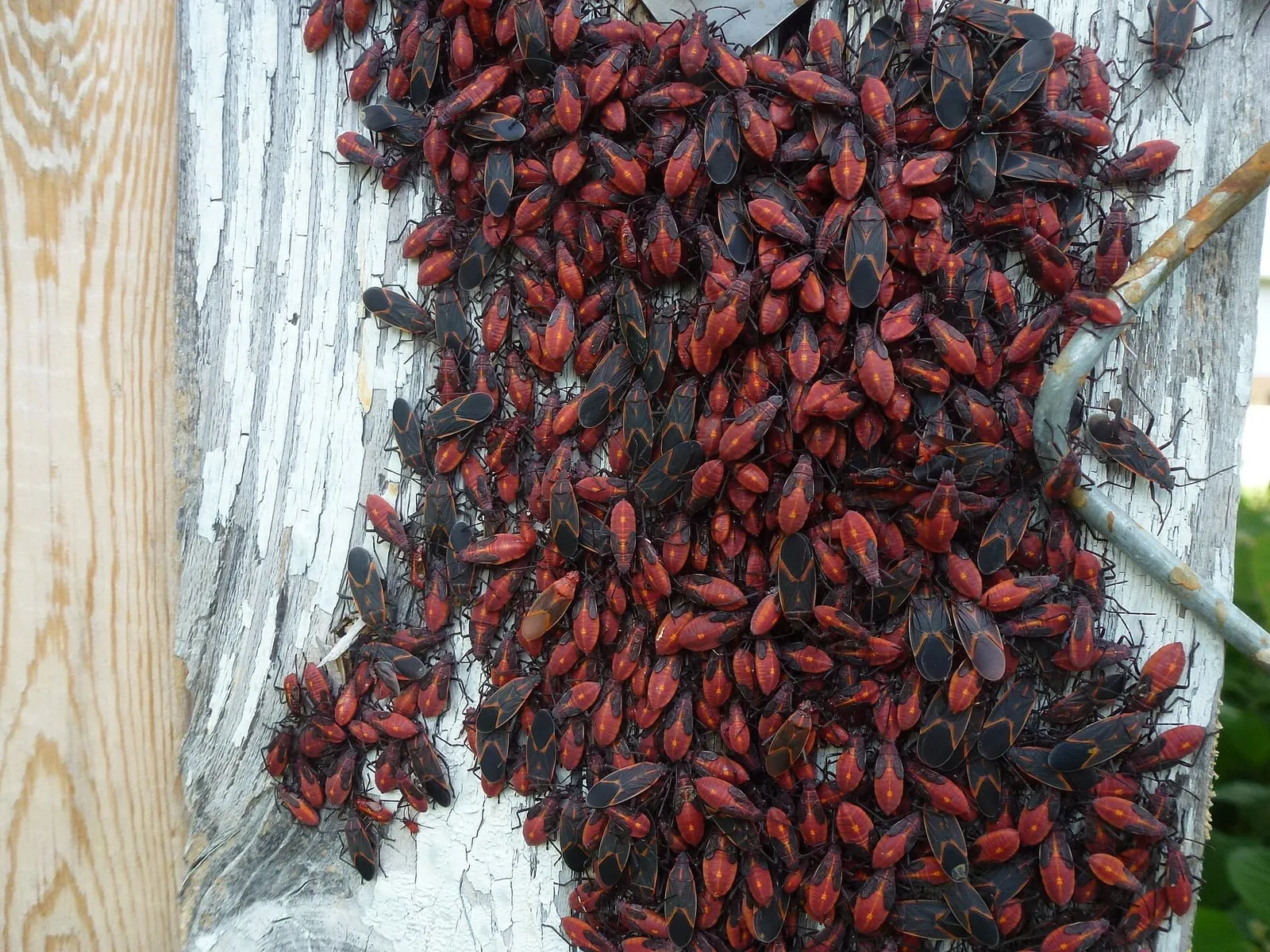
About half an inch long, slate gray to black, with reddish-orange lines behind the head and along the sides. They feed mostly on seed-bearing boxelder trees, so if you or a neighbor has one, you already know them.
They’re a nuisance and nothing worse. Indoors they go dormant without feeding, and they don’t breed in your walls over winter. On warm winter days a few wake up and wander toward the windows, which looks like a new batch. It isn’t. They’re the same bugs, a little confused.
Vacuum them up and empty the bag or canister outside. Don’t squash them on fabric or walls; a crushed boxelder bug on a curtain teaches you that once.
Earwigs
The European earwig is the one in Idaho gardens, under pots and, now and then, in the dish rack. Earwigs like dark, damp, tight spaces. UC IPM says they may come indoors when it gets too dry, too hot or too cold outside, and that large numbers are annoying but not a health hazard. Despite the folklore, they don’t crawl into anybody’s ears.
Earwigs are mostly a yard-work problem. Pull mulch, leaf litter and wood debris back from the foundation, clean out the gutters, and fix the spots where water pools against the house. Seal gaps around doors and basement windows, and swap white porch bulbs for yellow ones, which draw fewer of them. UC IPM also points out that spraying indoors won’t keep earwigs from coming in. Inside the house, a vacuum and a tight door sweep do more good.
Stink bugs
The brown marmorated stink bug is the one people ask about most, and we couldn’t confirm as much as we’d like. It’s an invasive species from Asia and a serious household nuisance back east, where it overwinters in houses by the thousands. The Idaho State Department of Agriculture confirmed the first Idaho sighting near Nampa in 2012, and there have been reports in the Treasure Valley since. What we couldn’t find is an official source saying it’s established and breeding in Boise. Idaho has native stink bugs too, and plenty of the shield-shaped bugs people find on their siding aren’t the invasive one.
If you think you’ve found a brown marmorated stink bug, look for light and dark bands on the antennae and along the edge of the abdomen, then send a sharp photo to your county extension office. Don’t squash it indoors. Knocking it into a container of soapy water avoids the smell.
Cluster flies
Slow, sluggish flies buzzing at an upstairs window in November, or on a sunny day in February, are probably cluster flies. Their larvae develop as parasites of earthworms, so they’re common around lawns and pasture. In fall the adults gather on the sunny sides of buildings and work their way into attics and wall voids, then come back out on warm days all winter.
They don’t damage anything and they aren’t breeding inside. WSU’s PestSense recommends screening attic vents and caulking gaps around siding and window and door frames, and warns that spraying the adults won’t make the problem go away. Until those gaps get closed, expect them back next year.
Spiders
Late summer and fall is when big brown spiders start running across floors. A lot of those are males out looking for a mate. We covered telling them apart in hobo spiders vs. giant house spiders, and black widows have their own post on where they hide. Knocking down webs around eaves, window wells and outbuildings before winter makes a real difference, which is why our residential visits start by knocking down webs and nests before any spraying. It’s a big part of spider control too.
Mice
Mice aren’t insects, but they keep the same fall schedule. House mice can squeeze through gaps about a quarter inch tall, so the sealing that keeps bugs out helps with mice too. Check garage door seals, the gaps where utility lines come in and the space under crawlspace doors. Our house mouse and deer mouse field guides cover the signs to look for.
Sealing up in September and October
You don’t need to rebuild the house. A free afternoon and a few tubes of caulk handle most of it. If bugs are already getting in, watch where they bunch up. A cluster at one window or outlet tells you where the gap is, and that’s the place to start.
- Replace worn weatherstripping and add door sweeps, including on the door from the garage into the house.
- Caulk gaps around window trim, and check that screens are intact and seated.
- Caulk cracks where siding meets trim and around the corners.
- Seal around pipes, dryer vents, cable and AC lines. Where mice are a concern, put steel wool or copper mesh under the sealant.
- Make sure attic, soffit and gable vents have intact screens.
- Pull mulch and debris back from the foundation and stack firewood away from the house.
- Switch exterior bulbs to yellow if you get a lot of night-flying insects.
Anything you can’t reach this year goes on the list for next August.
Treat before the first cold snap
The window for an outdoor treatment is before the bugs move. Once boxelder bugs and cluster flies are inside wall voids, a spray on the outside of the house can’t reach them, and spraying indoors mostly just gives you dead bugs to vacuum.
A treatment of the foundation, eaves and the areas around windows and doors in late August or September puts product right where bugs gather and try to get in. Most quality insecticides last about three months, so a late-summer treatment covers you through the fall rush. If you’re on a quarterly schedule, make sure one visit lands in that window. Our post on how often you should get pest control goes into scheduling.
We never spray flowering plants directly, which matters in September while late bloomers are still feeding pollinators.
If your house fills up with bugs every fall, a residential treatment in late summer, ahead of the first cold nights, is the simplest fix. Reach out to get on the schedule.
Quick answers
Why are boxelder bugs all over my house in October?
Adult boxelder bugs spend the winter in sheltered cracks, and University of Idaho Extension notes their movement off the trees picks up in October, right after the first frost. They gather on warm, sunny walls and work their way into gaps around foundations, windows and door frames. They are looking for a place to sleep through winter, not food.
Are boxelder bugs harmful?
Not really. They don't bite people in any meaningful way, don't eat your house, and go dormant indoors without feeding or breeding. The problem is numbers and the mess if you squash them, which is why vacuuming them up is the usual advice.
Are brown marmorated stink bugs in Boise?
The invasive brown marmorated stink bug was first confirmed in Idaho near Nampa in 2012, and it has turned up in the Treasure Valley since. We couldn't find an official source confirming an established breeding population in Boise, and Idaho has native stink bugs too. If you think you've found one, a clear photo to your county extension office is the best way to get an ID.
When should I spray for fall invaders?
Before they move in. A perimeter treatment in late August or September, before the first cold snaps, gives the product a chance to be in place when bugs start gathering on the walls. Once they are tucked inside wall voids and attics, a spray outside won't reach them.