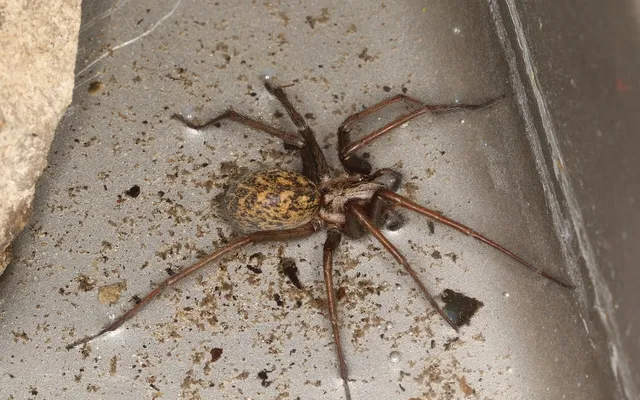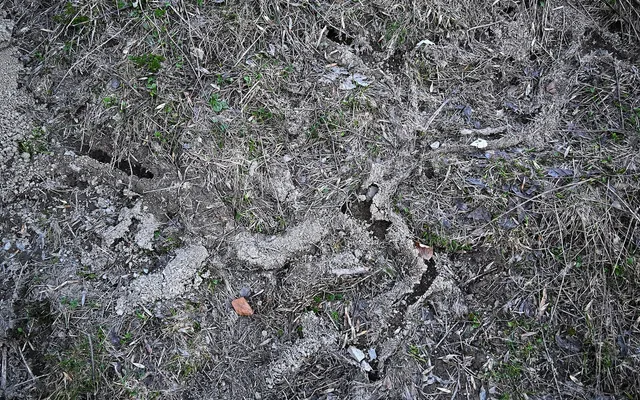
Most of the spider fear in Idaho is misplaced. The hobo spider’s bad reputation hasn’t held up (we went through the research in hobo spiders vs. giant house spiders), and the brown recluse doesn’t live here. The western black widow, Latrodectus hesperus, does. The CDC lists two venomous spiders in the United States, and this is the one you’ll actually find around Treasure Valley homes.
Widows aren’t aggressive, and bites are uncommon. The trouble is that they live in exactly the places people reach into without looking.
Where they hide around Treasure Valley homes
UC IPM describes black widows as living in dark, dry, sheltered, relatively undisturbed places. Utah State University Extension lists them as common around foundations, rock piles, woodpiles, outbuildings, water meter and irrigation boxes and exterior lighting. In a Boise-area yard, these are the spots to check:
- Window wells. They’re deep, dry and rarely disturbed, and insects keep falling in. A favorite.
- Water meter boxes and irrigation valve boxes. The lid you flip open each spring to start the sprinklers or check the pressurized irrigation valve is classic widow habitat.
- Woodpiles and stacked lumber, especially wood stacked against the house or fence.
- The lower corners of garages and sheds, behind shelving, under workbenches, and inside boots and gloves that have been sitting there.
- Gaps in block walls, rock borders and landscape timbers.
- Patio furniture, grill covers, stacked pots and anything else that sits still outside all summer.
- Under deck steps, around utility boxes and behind exterior light fixtures, where the lights pull in insects.
What you’re looking for
The web usually gives a widow away before you see the spider. Black widows don’t spin flat, tidy orb webs. They build a tangled, irregular cobweb close to the ground, out of silk strong and sticky enough that it crackles a little when you break it, and there’s often a funnel-like retreat leading back into a crack or hole.
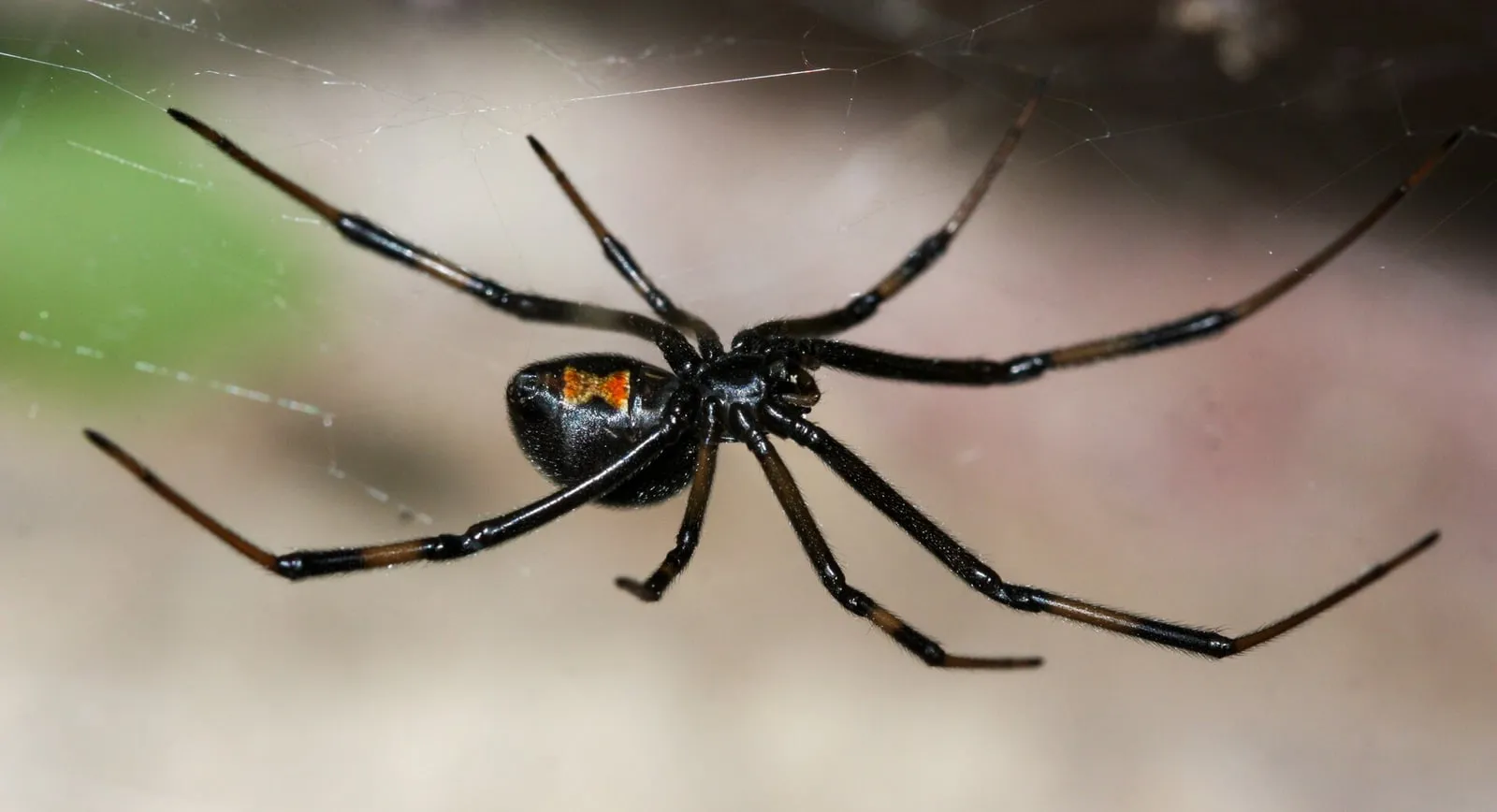
The adult female is the one that matters. She’s glossy black with slender legs and a red or orange hourglass on the underside of the abdomen, and since she usually hangs upside down in the web, the hourglass is often the first thing you notice. Some females have only part of an hourglass, or a couple of red spots instead.
Males are much smaller, roughly half to two-thirds the length of a female, and tan or brown with white or light stripes. UC IPM notes that male fangs are too small to break human skin. Juveniles start out pale tan to brown with white and orange banding and get darker and more solid black with each molt. A lot of “what is this striped spider” photos turn out to be young widows.
Egg sacs are round, papery, creamy yellow to tan and about 1/2 inch across. If you find one, a female is close by.
Checking without getting bitten
Black widows bite defensively, almost always because they got pressed against skin: a hand reaching into a meter box, a foot sliding into a boot. A few habits take away most of the risk.
Wear leather work gloves for yard and garage cleanup, every time. Shine a flashlight into window wells, meter boxes and the backs of shelves before you reach in. Pry meter and valve box lids up with a screwdriver or lid key, and let the box sit open a second before your hand goes in. Shake out gloves, boots and clothes stored in the garage or shed before you put them on.
If you want to know how many you’ve got, go out after dark. Widows tend to stay in their retreats during the day and sit out in the web at night, so a flashlight walk around the foundation after sunset shows you where they are.
Keep kids out of window wells and away from woodpiles, and teach them what the hourglass looks like.
To get rid of a spider and its web, use a vacuum, which keeps your hands out of it. Vacuum the egg sacs too, then seal the bag or empty the canister into a bag and put it in the trash.
Making the yard less inviting
UC IPM notes that insecticides alone won’t give long-term control of spiders outdoors. What keeps widows from coming back is taking away the places they like:
- Keep firewood off the ground and away from the house, and bring in only what you’ll burn soon. Before winter is a good time to move the pile.
- Clear leaves and debris out of window wells, and fit covers that seal well.
- Cut down the clutter in the garage and shed, and store things in sealed plastic bins.
- Seal gaps around the foundation, siding, doors and utility penetrations, and keep door sweeps tight.
- Swap bright white exterior bulbs for yellow or warm-toned ones so they draw fewer insects.
- Knock down and vacuum webs regularly so spiders don’t settle in.
If you get bitten
Black widow venom is a neurotoxin. It acts on nerves and muscles rather than causing a wound. According to MedlinePlus, from the National Library of Medicine, the bite often feels like a pinprick, and some people don’t feel it at all. There may be mild swelling and redness.
After 15 minutes to an hour, a dull muscle pain can spread out from the bite. Bites on the upper body tend to cause chest pain and bites on the lower body tend to cause belly pain, sometimes bad enough to be mistaken for appendicitis or a heart attack. Other symptoms can include muscle cramps or stiffness, sweating, nausea and vomiting, headache, high blood pressure, restlessness and difficulty breathing.
Deaths in healthy adults are very rare, and severe symptoms usually begin improving within two to three days. Young children, older adults, pregnant women and people who are already ill are at higher risk.
We do pest control, not medicine, so take the rest of this as a pointer to the people who know:
- Call Poison Control at 1-800-222-1222. The Poison Help line is free, confidential and open 24 hours a day, and it connects you to your regional poison center, staffed by nurses, pharmacists and doctors.
- Call 911 for trouble breathing, a seizure, severe pain or cramping, or any bite in a small child or someone with serious health problems.
- While you wait, wash the bite with soap and water, apply ice wrapped in a cloth for 10 minutes on and 10 minutes off, keep the bitten limb still, and take off rings or tight jewelry.
- If you can catch the spider safely, bring it in a sealed container. It helps with identification, but don’t delay care to catch it.
Save 1-800-222-1222 in your phone under “Poison Control” now, before you need it.
If widows keep turning up around the house, our spider control visit starts by knocking down webs and nests, outbuildings and fence lines included, before anything gets sprayed. With kids or pets at home, read pest control safety around pets and kids first. Call (•••) •••-•••• or get in touch.
Quick answers
What should I do if a black widow bites me?
Stay calm, wash the bite with soap and water, and apply a cold pack wrapped in cloth, 10 minutes on and 10 off. Call Poison Control at 1-800-222-1222 for advice, and call 911 if there is trouble breathing, severe pain or cramping, or a seizure. Seek care promptly for young children, older adults, pregnant women and anyone with health problems.
What does a black widow bite feel like?
Often like a pinprick, and some people don't feel it at all. Within about 15 minutes to an hour, a dull, spreading muscle pain can develop, often settling in the chest or belly, along with cramps, sweating, nausea or headache. Those whole-body symptoms are the reason to get medical advice rather than waiting it out.
Are male black widows dangerous?
Not really. Adult male western black widows are much smaller than females, tan with light markings rather than glossy black, and UC IPM notes their fangs are too small to break human skin. The females are the ones to watch for.
Where do black widows hide around the house?
In dark, dry, undisturbed spots close to the ground. Around Treasure Valley homes, check window wells, water meter and irrigation valve boxes, woodpiles, block walls, stacked pots, the corners of garages and sheds, and under patio furniture and deck steps.