Every year, somewhere between the Fourth of July and the first hard frost, a big brown spider sprints across a Boise basement floor and somebody yells “hobo spider.” Sometimes they’re right. Often it’s a giant house spider, a domestic house spider or a grass spider that wandered in. None of them are the flesh-eating menace the internet promised, and most of the ones running across floors in September are males out looking for a mate.
Why they’re on the floor in September
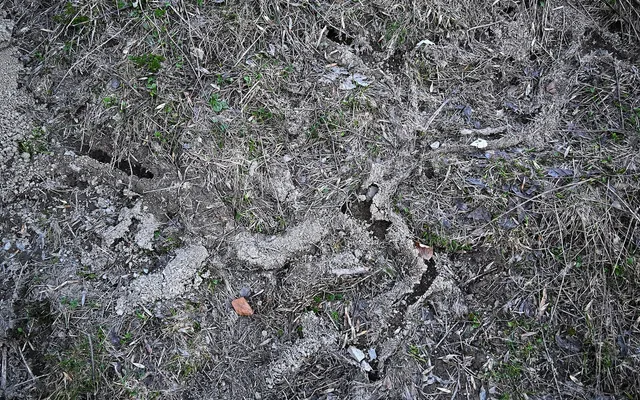
Hobo spiders and their relatives spend most of their lives in sheet webs tucked into cracks, under boards, in window wells and along foundations. Females mostly stay put. In late summer the males mature and leave their webs to find mates.
University of Idaho Extension describes lone adult males running across basement and ground-level floors from mid-July until the first killing frost. They come in under doors, through gaps in siding and up from window wells. Because they’re poor climbers, they end up on floors, in tubs and sinks and along baseboards, so the “invasion” seems to start in August and peak around September. They aren’t moving in for the winter. Most are adult males at the end of their lives.
Telling them apart
Positive identification of a hobo spider takes a look at the reproductive structures under magnification. UC IPM goes as far as saying a hobo spider ID by a non-specialist “should be suspect.” A few features still narrow it down fast, and the legs are the place to start.
Hobo spider
The hobo spider (Eratigena agrestis, formerly Tegenaria agrestis) is a European funnel weaver. University of Idaho Extension says it was first found in Idaho in the 1960s and is now common statewide, the Treasure Valley included.
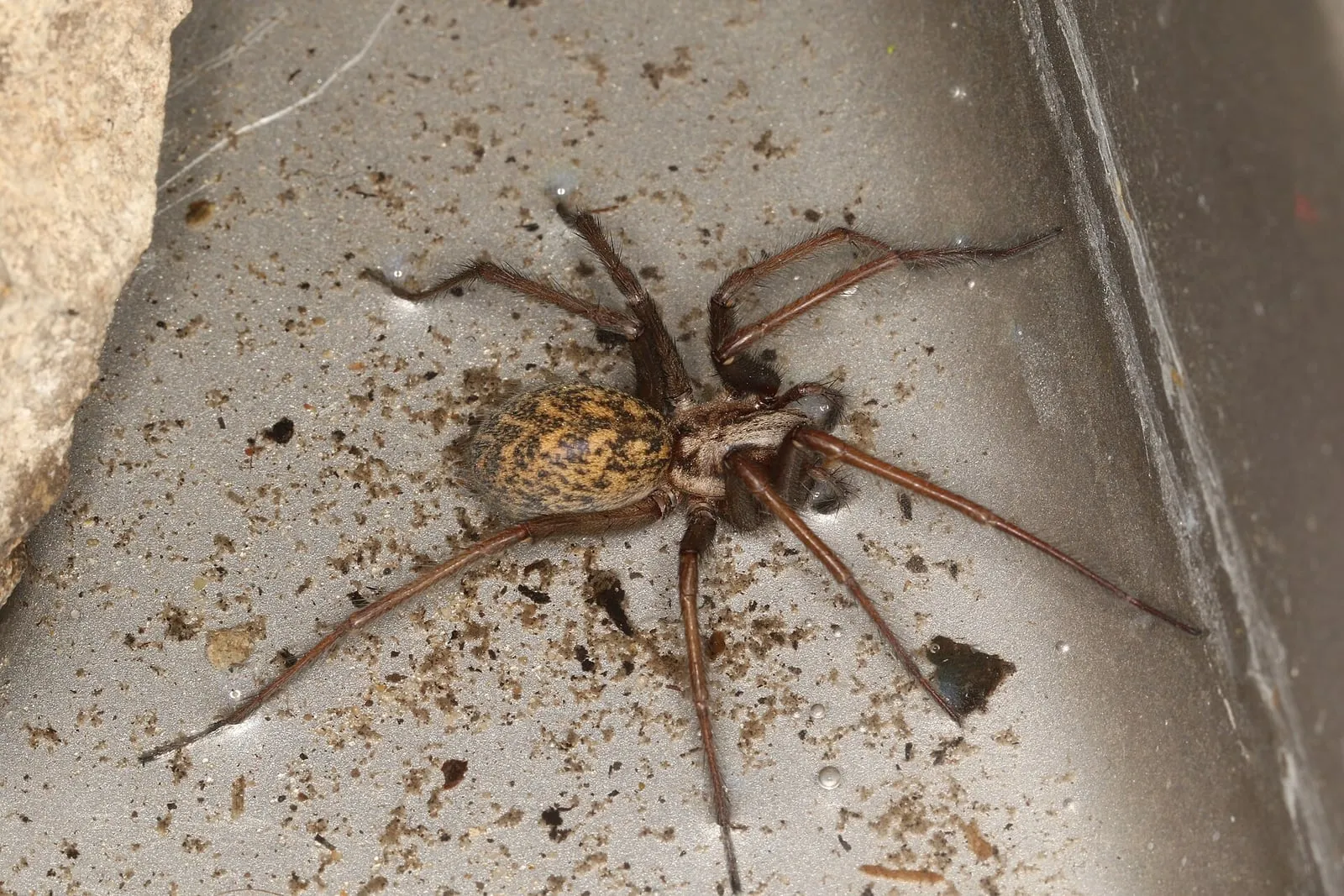
The body is about 1/2 to 5/8 inch long, or roughly 1 to 1 3/4 inches with the legs. It’s brown to tan-gray with a herringbone or chevron pattern of light marks down the top of the abdomen. The legs are a plain, even brown with no dark bands, and that’s the most useful clue you’ll get without a microscope. Its webs are usually hidden under objects and don’t look much like a classic funnel.
Giant house spider
The biggest of the bunch: a body about 1/2 to 1 inch long, with a leg span that can reach about 4 inches. It’s brown to grayish brown and hairy, and the color and markings vary too much to rely on. Recent taxonomy splits it out as Eratigena duellica; older references call it Tegenaria or Eratigena atrica.
It’s mainly a spider of western Washington, western Oregon and coastal British Columbia. Washington State University says it isn’t found east of the Cascades in that state, and it’s rarely recorded in Idaho. If it looks familiar from a Seattle forum, that’s why. In a Boise basement it’s the less likely answer.
Domestic house spider (barn funnel weaver)
Smaller, with a body about 1/4 to 1/2 inch, and legs with distinct dark and light bands. Banded legs rule out a hobo spider. It lives indoors and in garages and sheds worldwide.
Grass spiders
Native funnel weavers in the genus Agelenopsis, and the ones that build the obvious sheet-and-funnel webs on shrubs, lawns and ground cover. Look for two dark stripes running back along the front body section, and long spinnerets at the rear that look like a pair of tiny tails. They’re fast, shy and common in Treasure Valley yards, and the males wander indoors in late summer too.
Wolf spiders get mixed into this conversation as well. They don’t build webs at all, and if you look closely you’ll see a pair of large, forward-facing eyes that funnel weavers don’t have. They hunt on the ground and wander in for the same reasons.
What the research says about bites
In the 1980s and 1990s the hobo spider picked up a reputation for causing slow-healing, ulcerating wounds, and pest control marketing has been repeating it ever since. The evidence didn’t hold up.
In a 2004 editorial, spider researcher Rick Vetter and toxicologist Geoffrey Isbister reviewed the medical literature and found only one verified hobo spider bite that led to a necrotic lesion, in a patient who had another condition known to cause them. A 2001 venom study found that venom from both Pacific Northwest and European hobo spiders produced no necrotic wounds in rabbits. An Oregon study of verified spider bites, published in 2014, included one confirmed hobo spider bite, and the symptoms were pain, some redness and leg twitching that lasted about 12 hours.
The CDC’s venomous spider guidance now lists just two spiders in the United States: the black widow and the brown recluse. The hobo spider was dropped from that list, which University of Idaho Extension dates to 2015. UI’s own fact sheet says hobo spiders can bite but are no longer thought to be poisonous.
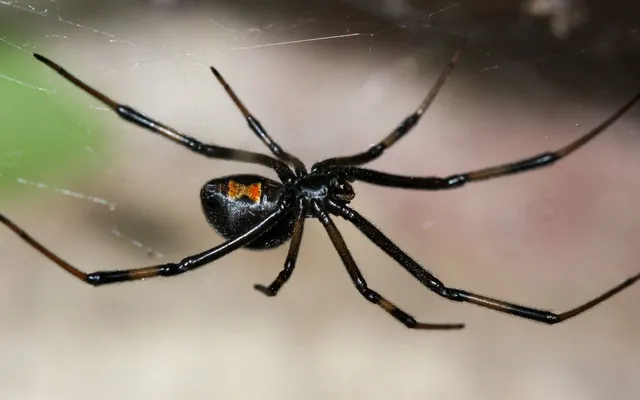
The brown recluse doesn’t live in the Treasure Valley either; its native range ends far to the south. The Idaho spider that does deserve respect is the western black widow, and it gets its own post on where black widows hide and how to check safely.
Keeping them out of the house
Spray alone won’t solve a wandering-spider problem. Washington State University notes that pesticides are a temporary fix unless you also keep spiders from getting in.
Sticky traps are cheap and they work on these spiders. Lay glue boards flat along basement and garage walls, behind furniture and next to doors from mid-July on. Hobo spiders run along edges and get caught easily, and checking the traps tells you what you’re actually dealing with. Look at the legs.
Most of these spiders walk in under doors, especially the garage-to-house and basement doors, so door sweeps and weatherstripping are the first fix. Replace any sweep you can see daylight under. Clear leaves and debris out of window wells and check that the covers fit. Keep firewood off the ground and away from the foundation, and store boxes in sealed plastic bins rather than cardboard on the floor.
Outdoor lights draw the insects spiders eat, so warm-colored or yellow bulbs near doors help. Knock down webs around the foundation, window wells and eaves with a broom now and then. Indoors, a vacuum takes care of spiders, webs and egg sacs with no chemicals at all.
If big brown spiders keep showing up anyway, spider control can help. Treatments last about three months, so most homes end up on a quarterly schedule, and spiders usually arrive with the rest of the fall crowd covered in boxelder bugs and earwigs. Call (•••) •••-•••• or send us a message.
Quick answers
Are hobo spiders dangerous?
Current research says no more than most spiders. A 2004 review of the medical literature found only one verified hobo spider bite linked to a necrotic wound, and that patient had a separate condition that also causes lesions. The CDC's venomous spider guidance now covers only black widows and brown recluses, and University of Idaho Extension says hobo spiders are no longer thought to be poisonous.
Why are there so many big spiders in my house in September?
Most of them are adult males that have left their webs to look for females. University of Idaho Extension notes that lone males run across basement and ground-level floors from mid-July until the first killing frost. They aren't nesting indoors, and most will die off by late fall.
How do I tell a hobo spider from a giant house spider?
By eye, you often can't, which is why experts confirm hobo spiders under a microscope. Giant house spiders are larger, with leg spans that can reach about 4 inches, but they are mainly found west of the Cascades and are rarely recorded in Idaho. In a Boise basement, a brown funnel weaver with plain, unbanded legs is more likely a hobo spider.
Do hobo spiders climb walls?
Not well. Hobo spiders are poor climbers and are usually found on floors, in window wells or trapped in sinks and tubs. A big brown spider on the ceiling or high on a wall is probably something else.